
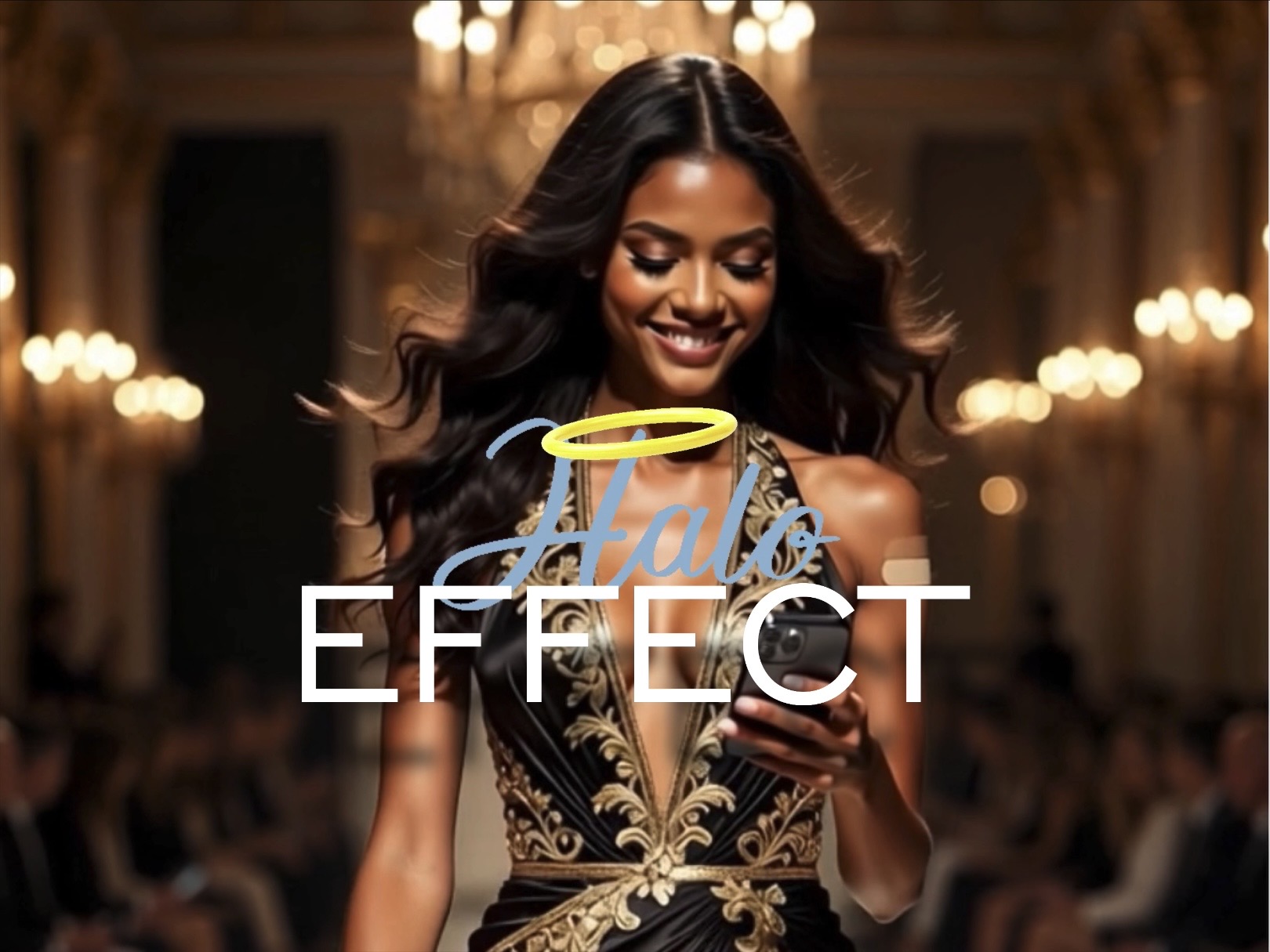
Pretty Privilege Is Real. Here’s What the Research Actually Says
There’s a reason the hottest person in the room gets the benefit of the doubt before they’ve said a single word. Psychologists have a name for it, and it’s older than dating apps, older than social media, older than most of what we call modern dating: the halo effect.
Thank you for reading this post, don't forget to subscribe!WHAT THE HALO EFFECT ACTUALLY IS
In 1920, psychologist Edward Thorndike noticed something odd while studying military officers: commanders who rated a soldier highly on one trait — say, physical bearing — tended to rate that same soldier highly on totally unrelated traits, like intelligence or leadership, without any evidence for it. One good impression was bleeding into every other judgment. Thorndike called it the halo effect, and decades of research since has confirmed it applies most powerfully to physical attractiveness.
The shorthand psychologists still use is “what is beautiful is good.” Attractive people are consistently assumed — by strangers who’ve never spoken to them — to also be more intelligent, more trustworthy, happier, more competent, and more successful. None of that is measured. All of it is assumed, instantly, and mostly unconsciously.
WHERE IT SHOWS UP
The research trail is long and uncomfortable. Attractive employees are rated as more competent even when performance metrics are identical. Attractive students receive grading advantages on subjective assignments. Attractive defendants are less likely to be convicted, and when they are, they receive lighter sentences. Attractive job candidates are more likely to be hired and promoted.
And in dating specifically, the bias isn’t subtle. Speed-dating research (Eastwick and Finkel) found that physical attraction drives romantic interest at first sight even among people who insist they value personality and character more. The halo effect doesn’t wait for a conversation. It’s already decided before the first sentence.
THE FILTER PROBLEM
A 2026 study on beauty filters added a modern twist: researchers showed the same 462 people’s faces to nearly 2,800 raters, once unedited and once run through a standard beauty filter. The filtered versions were rated as significantly more intelligent and more trustworthy than the exact same face, unfiltered. Nothing about the person changed. Only the halo did.
THE NUMBERS NOBODY PUTS NEXT TO THIS
Here is where it stops being an interesting psychology finding and starts being a practical problem.
According to the World Health Organization, about 3.8 billion people under the age of fifty — roughly two in three of us — are living with HSV-1, the virus behind oral herpes. More than one in five adults aged fifteen to forty-nine, some 846 million people, are living with genital herpes. Forty-two million new genital herpes infections happen every year, which works out to at least one every second while you read this sentence. And the line that matters most: most of these infections cause no symptoms at all, or symptoms mild enough to go unrecognized.
Read that again, because it changes the shape of the problem. The issue in modern dating is not a population of people hiding something. It is a population of people who genuinely do not know. Including, statistically, a lot of the ones reading this.
WHAT THAT MEANS FOR HOW YOU DATE
Put the two findings side by side and the math gets uncomfortable. A good photo reliably produces assumptions of trustworthiness, competence, and — this is the dangerous one — health. That’s the halo effect, measured across dozens of studies and cultures for over a century. Meanwhile the actual prevalence data says that a very large share of healthy-looking, well-lit, entirely honest people are carrying something they have never been told about.
So the smartest strategy in online dating is also the least dramatic one: assume nothing is known yet. Not about them. Not about you. This is not suspicion, and it is not an accusation. It is the same logic every emergency room in the world already runs on, and it has a name there — universal precautions. You don’t treat the patient in front of you as dangerous. You treat the situation as unknown until it’s known, because the alternative is guessing, and guessing is what actually gets people hurt.
Applied to dating, it comes out simpler than it sounds. Nobody is presumed to be anything. Everybody finds out. Then you decide, with the same information, at the same time. That is not a mood-killer. That is what makes the rest of it relaxed.
WHY WE BUILT WHAT WE BUILT
Pretty privilege isn’t an internet complaint. It’s a measurable, replicated finding. And it’s exactly the gap swaGGerscan was built to close — not by asking anyone to be less attractive, but by refusing to let a good photo stand in for the one thing a photo can never tell you. A great photo can get you a match. It cannot tell you, or them, what neither of you has been told.
Know first. Then let the halo do whatever it wants.
Latest